WELCOME TO
SAGAR GROUP OF INSTITUTES
Industry Readiness
Skill Based Education
Industry Readiness
Preparing for the Corporate World
Global Exposure
International Collaborations
Research Innovation
Nurturing Bright Minds
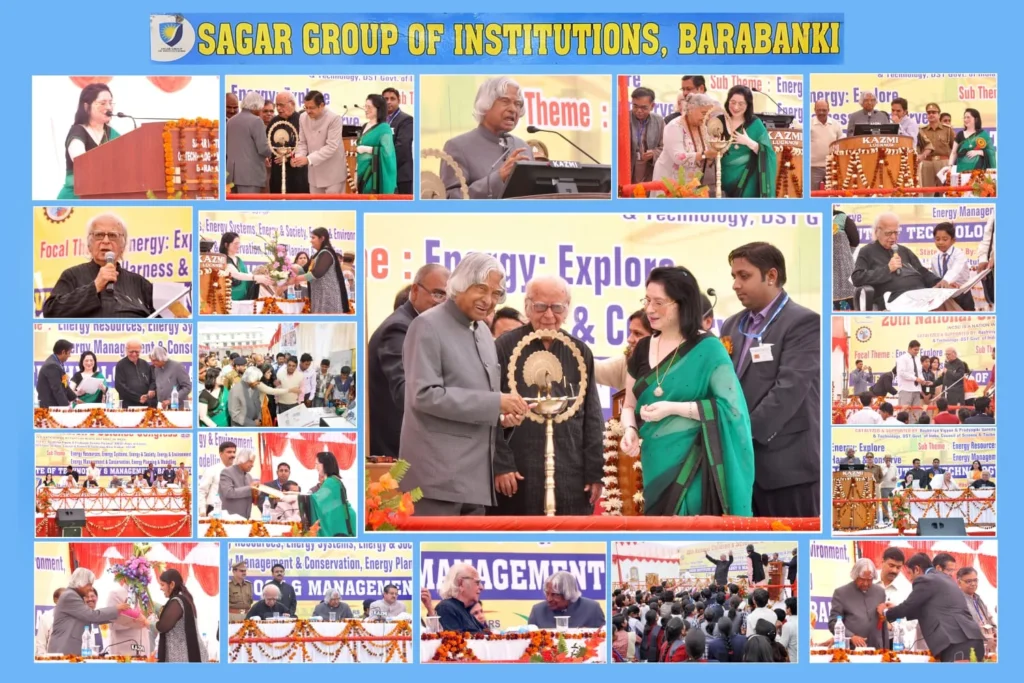
Historic Moment
A Legacy of Inspiration
We were immensely honored to host the visionary Dr. A.P.J. Abdul Kalam, Former
President of India. His visit continues to ignite the minds of our students, guiding them
towards innovation, excellence, and a brighter future.

Discover the World of
Sagar Group of Institutions
A premier educational hub in Lucknow, UP — offering AICTE-approved engineering, PCI-approved pharmacy, and management programs with industry-aligned curriculum.
Established in 2000
Over two decades of academic excellence and innovation
AKTU & BTEUP Affiliated
Approved by AICTE, PCI and affiliated to AKTU (Code: 141) & BTEUP
3 Colleges Under One Roof
Engineering, Pharmacy & Management — all on one vibrant campus
Recognitions
Approvals & Affiliations
All courses conducted at Sagar Group of Institutions are fully accredited by apex federal
councils and affiliated to leading state universities.
AICTE
Approved by AICTE, New Delhi
PCI
Approved by Pharmacy Council of India
AKTU
Affiliated to Dr. A.P.J. Abdul Kalam Technical University
BTEUP
Affiliated to Board of Technical Education, UP